
VIP member

MSCL-IR Infrared Thermal Imaging System
Introduction to Geotek: Geotek UK is the designer and manufacturer of the world's best-selling core equipment MSCL (Multi Sensor Core Logger Core Comp
Product details
Geotek Company Introduction:
Geotek, a British company, is the designer and manufacturer of the world's best-selling core equipment MSCL (Multi Sensor Core Logger Core Comprehensive Testing System, also known as Multi Parameter Core Scanner). Almost every laboratory engaged in core research work in the world (scientific research, engineering exploration, oil drilling, etc.) has installed MSCL, with over 220 users. MSCL has very stable, reliable, and durable performance, suitable for both laboratory and field use. It has been widely used in core libraries, geological key laboratories, temporary field laboratories, offshore survey ships, deep-sea drilling ships, and engineering ships around the world. Geotek is the most commonly used core analysis equipment by scientists. Wherever there are rock cores on Earth, there are Geotek products.
If a core is worth taking, it's worth logging. ...岩芯宝贵,数据无价。

MSCL is currently the most widely used core scanner in the international scientific research and engineering fields, with over 220 users worldwide! MSCL is currently the most comprehensive integrated testing system for core geophysical and chemical properties in the world, applied to seabed sediment column samples, lake sediment column samples, rock cores, etc. The characteristic of MSCL is that it does not damage the sample, and multiple measurements are synchronized, fast, accurate, efficient, and fully automated. The maximum 10 parameters that can be measured include: P-wave velocity, gamma density, resistivity, magnetic susceptibility, color spectrophotometer, natural gamma rays, optical photography system, high-precision XRF element concentration (or handheld XRF), far-infrared temperature, visible and near-infrared ground spectra, etc. Customers can freely choose according to their own needs. Different MSCLs have different structures and can directly measure the entire rock core stored in plastic pipes, as well as measure cut open rock cores. Some measurements can be made through aluminum or stainless steel materials, but generally speaking, measurements made through plastic have better results. The multi model MSCL configuration has many advantages, which can be measured for different rock cores, operating conditions, and occasions to achieve the best results. MSCL has very stable, reliable, and durable performance, suitable for both laboratory and field use. It has been widely used in core libraries, geological key laboratories, temporary field laboratories, offshore survey ships, deep-sea drilling ships, and engineering ships around the world.
Natural gas hydrate infrared thermal imaging instrument
MSCL-IR
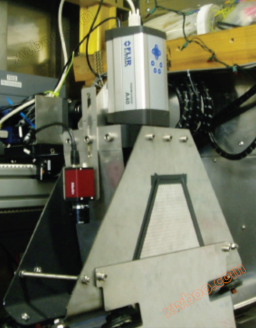
MSCL-IR keywords: used to determine the distribution of natural gas hydrates inside sediment cores. After the sample is collected, the system can collect infrared images with depth markers within a few minutes. The slide rail system can provide accurate camera positioning and provide good thermal shielding for the core sample to prevent external heat sources from affecting the sample. The maximum core length is 950cm and the maximum diameter is 15cm. The infrared images are saved in FLIR image format (. img) and processed using Geotek Infrared Imaging software. The image of the complete core sample can be output as a JPEG format image, and the complete core data combined with temperature data can be saved as an ASCII file.

Infrared imaging technology for natural gas hydrate detection
In the field of scientific research, infrared thermography is the most practical equipment used to determine the distribution of natural gas hydrates inside sediment cores. The separation and dissolution process of natural gas hydrates not only affects itself, but also reduces the temperature of surrounding sediments and core casings. Therefore, when a section of core sample is just collected from underwater, the cooling points caused by unstable hydrates can be detected using infrared thermography.
Infrared imaging tracking
The Geodek infrared imaging system includes a computer-controlled infrared camera mounted on a sliding bracket that can move along the rock core to quickly capture infrared images. The slide rail system can provide accurate camera position relative to the rock core and provide good thermal shielding for the rock core sample, preventing external heat sources from affecting the sample, including sunlight or other heat sources, especially the operator's heat. After the sample is collected, the system can capture infrared images with depth markers within a few minutes. The infrared images of the sample are equipped with an electronic ruler and displayed in real-time on the monitor, which can clearly display the corresponding infrared images according to the length of the rock core.
Real time data sampling
At the same time as scanning the sample, the low-temperature areas in the sample can be quickly determined based on the infrared image. The image is constantly displayed on the screen, making it easy to locate the location of thermal anomalies during the sampling process. If necessary, the image can be enlarged and manipulated to determine very small details.
Data post-processing adjustment and analysis
All infrared images are saved in FLIR image format (. img), and after data collection, they can be individually examined using FLIR software or processed using Geotek Infrared Imaging software. The image of the complete core sample can be output in JPEG format, and the complete core data containing temperature data can be saved as an ASCII file.

Online inquiry
-
Contacts
-
Company
-
Telephone
-
Email
-
WeChat
-
Verification Code
-
Message Content
-