
VIP member
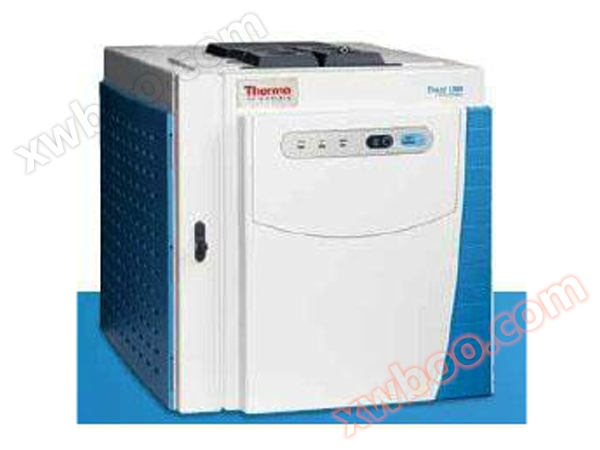
Thermo modular gas chromatograph
Thermo Scientific's newly launched TRACE 1300 modular gas chromatograph
Product details
Introduction to Thermo Modular Gas Chromatography TRACE 1300
Thermo Scientific's newly launched TRACE 1300 modular gas chromatograph has achieved a significant technological breakthrough. Innovate according to user needs, including enhancing component robustness, reducing the volume of injection ports and detectors, customizing human-machine interfaces, plug-in injection ports and detectors, and optimizing the design of electrical components.
Thermo Modular Gas Chromatography TRACE 1300 Main Features
1. A solution that meets your needs
The TRACE 1300 series GC is designed with two different models to meet the complex laboratory requirements. The TRACE 1300 GC is designed for conventional laboratories and provides easy operation for ordinary users. The simplified user interface of 1300 not only enables 24/7 boot up, but also provides good program control for remote users such as Petrochemicals who control through the network.
In larger conventional QA/QC laboratories, 1310 is a better choice. It has a fully touchscreen and user-friendly interface, making it easy to control the instrument directly on the host and save development methods directly. While retaining all the performance advantages of 1300, 1310 also includes multiple auxiliary functions such as localized column boxes, injection ports, detector upgrades, maintenance guides, operation logs, multilingual selection, and video guidance.
2. Plug in injection port and detector
On the TRACE 1300 series GC, changing the hardware configuration only requires loosening a few screws and inserting the injection port or detector into the designated position, which is convenient and fast. Through Thermo's patented "instant connect" technology, even without professional training, specialized tools, or online customer service engineers, it is possible to complete the hardware configuration of GC. This unique modular design has the following advantages for operators:
Do you want to use a bucket winch? mdash; - Easy to upgrade from single channel to multi-channel
Convenient instrument maintenance - replacing damaged injection ports and detectors only takes a few minutes
Instant Connection "- The Powerful Advantage of Modular Injection Ports
Real time connection "injection port module achieves multifunctionality
3. IC-SSL module
The new design of IC-SSL injection port can avoid the discrimination between split and non split injection, so more analytical substances gather at the injection port. The injection port largely avoids the harm of thermal conduction to the rubber gasket, reduces gasket loss, and extends gasket life. The special design of the injection port also ensures oxygen free operation, which can ensure accurate injection in high-efficiency mass spectrometry analysis. The flexible design of the injection port structure makes installation simple and fast, and the wide compatibility with standard consumables directly reduces the cost of use.
4. IC-PTV module
The IC-PTV injection port has a "non discriminatory" design with a cold column head. Integrating rapid heating and cooling, coupled with inert injection chamber and large volume injection function. The unique design and multi-mode selection enable the sample R to be brewed into A 簟 2, and the TV injection port uses a liquid cooling device. This PTV injection port adopts a compact thermogravimetric design and is equipped with a strong cooling circulation system. The unique plug-in design makes maintenance convenient and fast.
5. Backblowing and large volume injection capability
Both IC-SSL and IC-PTV modules can be upgraded to injection ports with blowback systems. This function enables non analytical heavy components or non target components to be blown out of the injection port through the reverse flow of the carrier gas, thereby protecting the chromatographic column and detector, saving analysis time, and improving work efficiency. The blowback function has significant advantages in complex matrix analysis, such as analyzing insecticides in food. Leaving aside the cleaning process of ordinary samples for now, only residual high boiling point substances entering the chromatographic column and detector can cause damage to the detector. The most common method is to use a low boiling point bath, such as the Ba Bi Chuang Rice Turbulence Bath, which is suitable for low boiling point cleaning. Tan Zhizhi's method of boiling point cleaning can also be used on C-SSL and IC-PTV. On standard IC-SSL, the maximum injection without splitting can reach 30 μ L. For volatile samples, this technique has significant advantages in analyzing complex matrices. PTV large volume solvent split injection can reach 250 μ L, which can greatly improve condylar flexion/span>
Online inquiry
-
Contacts
-
Company
-
Telephone
-
Email
-
WeChat
-
Verification Code
-
Message Content
-