
VIP member
Tianke Automation
Industrial automation is a general term for the information processing and process control of measurement, manipulation, and other processes that can
Product details
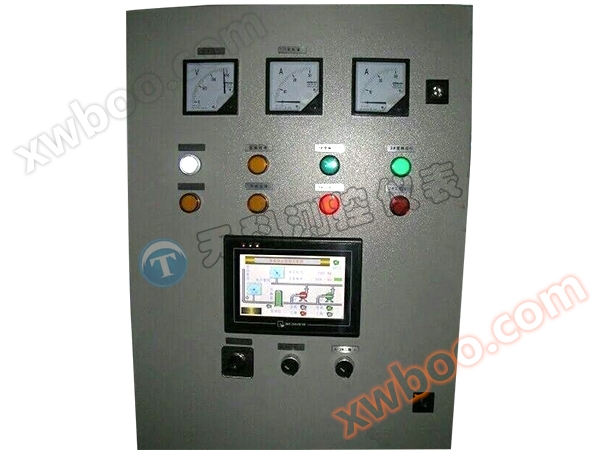
Industrial automation is a general term for the information processing and process control of measurement, manipulation, etc. that can be achieved by machine equipment or production processes according to expected goals without direct human intervention.
Automation technology is the exploration and research of methods and techniques for implementing automated processes. It is a comprehensive technology involving mechanical, microelectronics, computer, machine vision and other technical fields.
The Industrial Revolution was the midwife of automation technology. It is precisely due to the needs of the Industrial Revolution that automation technology broke through the eggshell and flourished. At the same time, automation technology has also promoted industrial progress. Nowadays, automation technology has been widely applied in fields such as mechanical manufacturing, electricity, construction, transportation, and information technology, becoming the main means of improving labor productivity.
Industrial automation technology is a comprehensive high-tech that applies control theory, instrumentation, computers, and other information technologies to detect, control, optimize, schedule, manage, and make decisions in industrial production processes, achieving the goals of increasing output, improving quality, reducing consumption, and ensuring safety. It includes three major parts: industrial automation software, hardware, and systems. Industrial automation technology, as one of the important technologies in the modern manufacturing field of the 20th century, mainly solves the problems of production efficiency and consistency. Both high-speed mass manufacturing enterprises and enterprises pursuing flexibility, adaptability, and customization must rely on the application of automation technology. The automation system itself does not directly create benefits, but it plays a significant role in improving the production process of enterprises:
(1) Improve the safety of the production process;
(2) Improve production efficiency;
(3) Improve product quality;
(4) Reduce the consumption of raw materials and energy in the production process.
According to international authoritative consulting agencies, the ratio of output improvement in terms of investment in automation systems and enterprise efficiency is approximately 1:4 to 1:6. Especially in capital intensive enterprises, automation systems account for less than 10% of the total equipment investment, playing a role of 'four taels of gold'. The traditional industrial automation system, also known as mechatronics system, mainly controls equipment and production processes. It consists of hardware elements such as mechanical body, power part, testing and sensing part, execution mechanism, driving part, control and signal processing unit, interface, etc., which are guided by purposeful information flow of software programs and electronic circuit logic to coordinate, organically integrate and form orderly and regular movement of matter and energy, thus forming an industrial automation system or product.
In the field of industrial automation, traditional control systems have gone through the development process of base based pneumatic instrument control systems, electric unit combination analog instrument control systems, centralized digital control systems, and distributed control systems DCS. With the development of control technology, computer, communication, network and other technologies, the field of information exchange and communication is rapidly covering various levels from the on-site equipment layer of factories to control and management. Industrial control machine system generally refers to the general term for automation technology tools (including automatic measuring instruments and control devices) that measure and control industrial production processes, their electromechanical equipment, and process equipment. Today, the simple understanding of automation has also shifted to using generalized machines (including computers) to partially, completely, or surpass human physical strength.
Online inquiry
-
Contacts
-
Company
-
Telephone
-
Email
-
WeChat
-
Verification Code
-
Message Content
-